
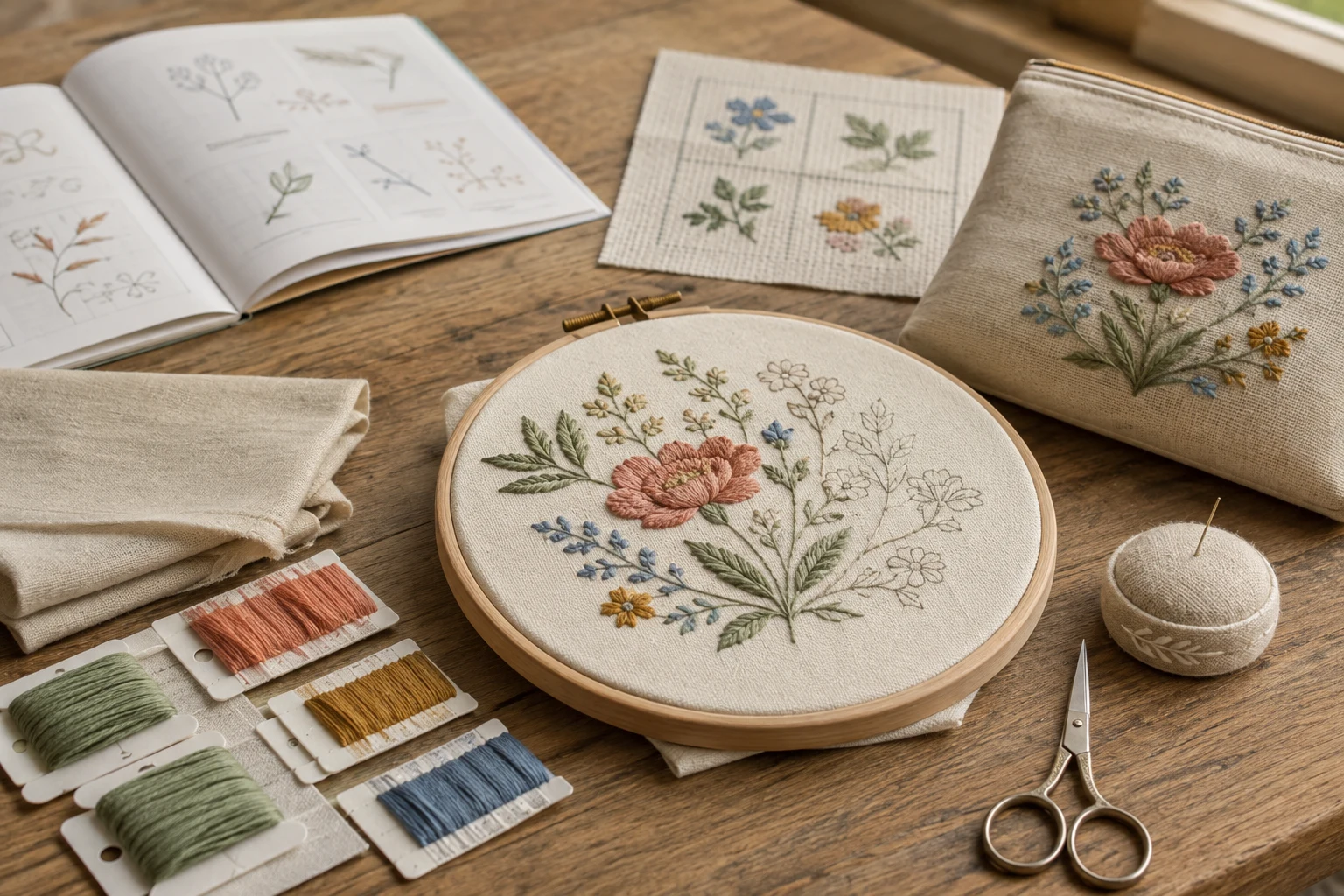
Cover image: AI-generated editorial concept; not a customer project or production proof.
Embroidery kits bundle a design with materials and instructions for a stitching project. They can simplify getting started, but “all-inclusive” does not guarantee every tool or finishing supply is included. Choose a kit by its technique, contents, instruction quality and intended use—not just the finished-project photograph.
For beginners, a manageable design with clear stitch diagrams is a useful starting point. Experienced stitchers can use kits to explore unfamiliar techniques, try different materials or make a gift without sourcing every component individually.
What does an embroidery kit include?
Check the contents of the exact kit you intend to buy. As one documented example, DMC’s Learning Embroidery Kit includes cotton thread, printed cotton fabric, a needle, a wooden hoop and an instruction booklet, with a QR code for a video tutorial. Its contents list does not include scissors. DMC Learning Embroidery Kit.
Component | What to check before buying |
|---|---|
Fabric | Material, dimensions and whether the design is printed or needs transferring. |
Thread | Fiber, colors, quantities and any replacement references. |
Needle | Whether a suitable needle is supplied. |
Hoop or frame | Whether it is included and intended for stitching, display or both. |
Pattern | Whether you receive printed outlines, a counted chart or a downloadable file. |
Instructions | Stitch diagrams, thread guidance, language and finishing steps. |
Additional supplies | Scissors, transfer tools, backing, hanging hardware or other items you must provide. |
Distinguish the fabric size, hoop diameter and finished design size. These describe different parts of the project; a large fabric square does not mean the stitched design will fill it.
Types of embroidery kits
Technique, difficulty and theme are separate buying decisions. A floral design can be a beginner project or a detailed piece requiring considerable practice.
Surface embroidery and stitch samplers
Surface embroidery projects offer opportunities to work outlines, filled shapes and decorative details. A sampler is a useful choice when your main goal is practicing several stitches before applying them to another project.
Read the stitch list rather than assuming every unfamiliar stitch requires advanced experience. DMC’s beginner learning kit, for example, includes running stitch, back stitch, satin stitch and French knots among its techniques. DMC’s listed project stitches.
Cross-stitch kits
Cross stitch builds designs using X-shaped stitches; counted cross stitch follows the fabric grid. It suits buyers who enjoy working from a chart. Check whether the kit is counted or stamped and whether its chart is readable at the supplied size. The Royal School of Needlework describes cross stitch as a counted-thread embroidery technique. RSN embroidery techniques.
Crewel and raised embroidery
Crewelwork uses wool thread, while stumpwork creates raised or three-dimensional elements. These offer different textures and learning opportunities. For a textured kit, check which techniques and extra materials the project requires before choosing it for its appearance alone. RSN technique definitions.
Themed and customizable kits
Nature, animals, seasonal motifs and abstract designs give you different creative starting points. For personalization, look for explicit options such as an alphabet, a space for initials or selectable colors. Do not assume the seller will alter a standard design.
If you plan to add a name or change a motif yourself, allow space in the layout and ask whether extra thread is available.
How to choose a kit you will enjoy finishing
Match the work to your experience
For a first project, favor clearly separated shapes, a modest color palette and instructions you can preview. Consider the amount of stitching as well as the number of stitch types: a small, densely filled design can still require sustained work.
For a later project, choose a specific learning goal—such as more consistent outlines, smoother filled shapes or raised details. One unfamiliar technique gives you a clearer focus than changing every aspect of the project at once.
Examine the materials and guidance
Look for stated fabric and thread composition, close photographs of the stitching and a clear contents list. Cotton, linen, silk and wool offer different possibilities, but a premium-sounding material name does not establish that a kit suits your project.
Instructions should explain where each stitch goes, which thread to use and how to finish the piece. If video support matters to you, confirm how to access it and whether printed guidance is also provided.
Compare the complete project cost
A kit can reduce the effort of gathering supplies, but it is not automatically cheaper than buying separately. Include missing tools, finishing materials and delivery when comparing options. If you already own hoops, needles and thread, a pattern-only purchase may make more sense.
For buyers in the US, Canada and UK, confirm the checkout currency, destination availability, shipping origin and return arrangements. Compare measurements in inches and centimeters, and check that instructions are available in English. Use the seller’s current checkout information for destination-specific charges and delivery estimates.
Learning and creating with a kit
A kit gives practice a defined project: you can repeat a stitch, compare sections and see how your work develops. Keep the pattern and thread references together so that it is easier to resume after a break.
Before starting, read the whole instruction booklet and compare the contents with its materials list. Follow the kit’s directions for preparing the fabric, using the thread and completing the stitching. When a stitch explanation is unclear, the Royal School of Needlework’s free Stitch Bank provides an additional educational resource. RSN Stitch Bank.
Leave ambitious changes until you understand the original layout. You might first change an accent color, then try initials or an alternative border on a later project. Stitching can also be an enjoyable, focused creative activity without needing a promised health benefit or a perfect result.
Ways to use the finished embroidery
Choose the intended use before buying, since it affects the size, fabric and finishing supplies you need.
Home decor: Plan a hoop display, framed picture, cushion panel or table-linen accent. Confirm whether additional assembly is required.
Personal accessories: Look for a project designed for a tote, pouch or other usable item, and check whether the item itself is included.
Gifts: Choose a subject the recipient likes and allow time for stitching and finishing. A kit can also be the gift if the recipient enjoys making things.
Clothing: Select a kit intended for garment embellishment and follow its material, placement and care guidance.
A decorative fabric panel is not automatically ready to become a washable accessory. Follow the project’s care instructions before removing printed marks, washing or pressing it.
When the goal is business merchandise
A hand embroidery kit can support a personal sample or an individual handmade gift. For repeated machine-stitched logos on uniforms or merchandise, the project needs a separate production workflow.
DigitEMB’s embroidery digitizing service covers preparing artwork for machine embroidery. That service is relevant when you need a machine stitch file; a hand embroidery kit does not require digitizing.
Digital support and material choices
Online instruction can supplement a physical kit. Check whether a QR code provides the full tutorial or only additional demonstrations, and whether any account or separate purchase is required. Downloadable patterns are another option when you prefer to assemble your own supplies.
For material and packaging preferences, ask specific questions: What is the fabric made from? Can leftover thread be reused? Is the packaging reusable? If a seller describes a product as recycled or organic, look for supporting product information. A broad environmental label alone does not explain the whole kit.
Specialty threads and raised techniques can expand your creative options. Treat them as project choices and learning opportunities, rather than evidence that a kit is inherently better.
Frequently asked questions
Are embroidery kits suitable for complete beginners?
Yes, when the project includes clear instructions and an achievable design. Check the stitch list, pattern readability and required extra supplies before buying.
Does an all-inclusive kit contain everything?
Check the itemized contents. Scissors, display backing or other finishing materials may need to be supplied separately.
Do I need an embroidery machine?
You do not need one for a hand embroidery kit. Confirm whether a listing is for hand stitching, a machine project or a digital pattern before ordering.
Can I personalize a standard kit?
You can plan changes to colors or details, but check the available space and thread quantities first. For names or dates, a kit with explicit personalization guidance is easier to assess.
How long will a kit take to finish?
It depends on the design’s coverage, techniques, your experience and the time you spend stitching. Use any maker estimate as a planning guide and leave additional time for learning and finishing.